
Wild Spring Greens in the Tropics

If you’re getting a wee bit jealous of all the foragers in North America, Europe, and northern Asia who are harvesting dandelions right now, just remember that here in Hawai’i the cat’s ear (Hypochaeris radicata) can be used in almost all the same ways and is available year-round.
Cat’s Ear
Roots, leaves, unopened flower buds, tender stems, and flowers of the Cat’s Ear are all edible.


Photos by Sunny Savage
The flowers take about 3 days to fully open to the sun. The plant’s motherland is Morocco, a country who still cherishes their wild foods.
The leaves have an interesting adaptation to lawn mowers. If the plant is found growing in the wild the leaves grow more upright, but after a few rounds of getting hit with the mower they go prostrate and hug the ground. So smart!

This fun dish is simply fresh cat’s ear flowers, eggs, and breadcrumbs, along with a high heat oil to pan fry them and salt to taste.
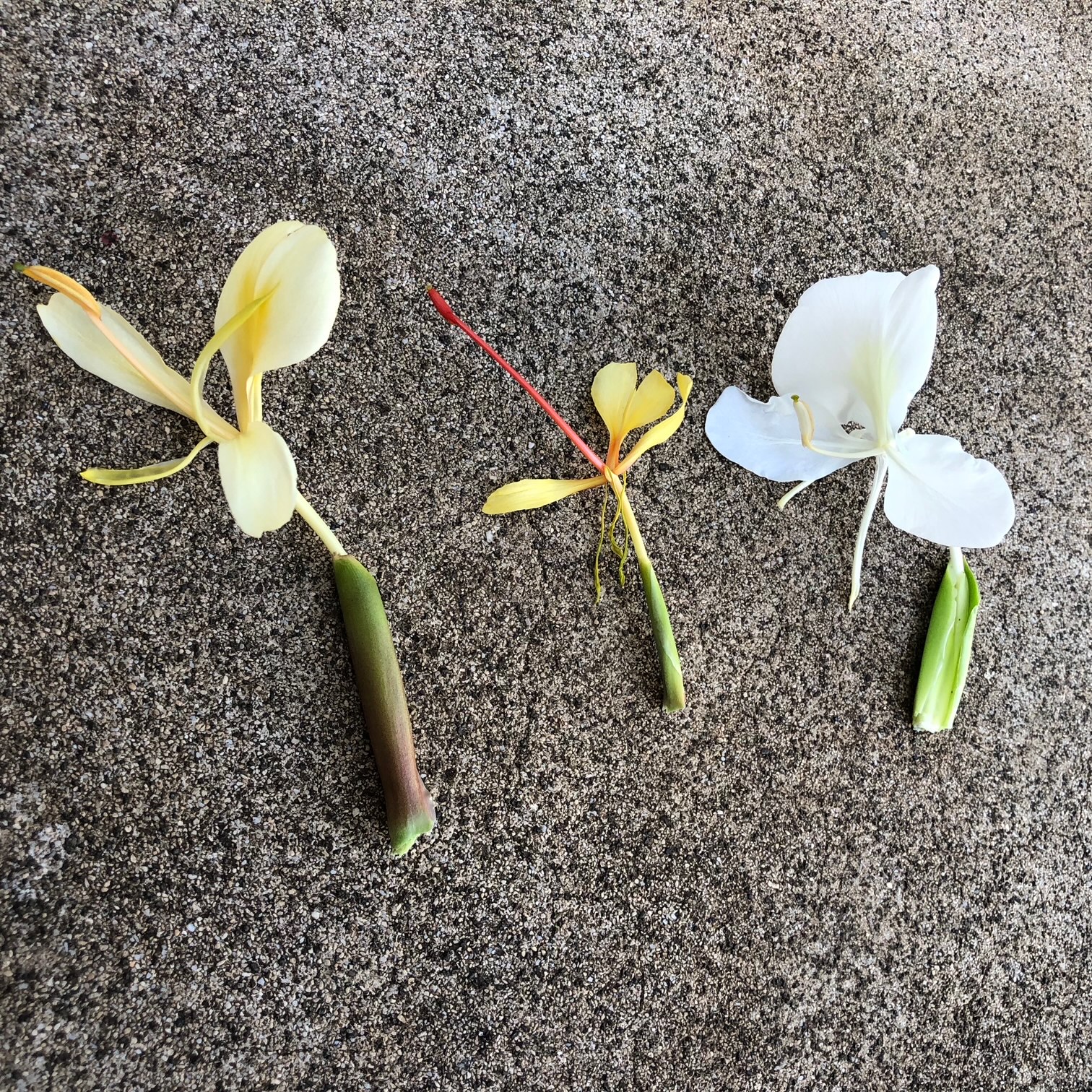
I’ve also been sipping on rich teas made with the roots, a tea combining cat’s ear flowers and kāhili ginger flowers, cooking the greens… but it is the unopened flower buds and tender stems that are my favorite! Blanched in boiling water for 3 minutes, drained and put in an ice bath for another few minutes, then strained and eaten.

Tropical Chickweed

Have you seen this little plant growing in moist areas? It’s a darling wild edible called tropical chickweed (Drymaria cordata), and is wildly abundant in tropical and subtropical locations around the globe – in areas that get plenty of rain as the plants like moisture. This photo comes from the Brisbane City Council, where you can find more detailed images.
Tropical chickweed has been used, and continues to be used, in the treatment of jaundice by the Tea Tribes in India. It is used in the treatment of pain (analgesic) and the reduction of fever (antipyretic) in Africa, and many others. Study up on the different species of Drymaria, and the CABI report on how it is now listed as a weed in more than 45 countries!
The Florida School of Holistic Living gives you a step-by-step video tutorial on making tropical chickweed pesto, as well as fun ideas for using it when making soup broths, etc to bring more of these nutrient-dense wild foods into your life. Above-ground parts of the plant are edible.
Nettle-leaved Goosefoot

With edible leaves, seeds, and meristems (when tender), the nettle-leaved goosefoot (Chenopodium murale) is an ancient food crop. Read this article for current musings on the Chenopodiums. I don’t eat it often, but the wind reminded me that summer is coming and our paths crossed. My body received a homeopathic dose of the going-on’s of the ecosystem, a story of delicate wanderings in the sand.


Photos by Sunny Savage
I boiled the greens in 2 changes of water. Then, ate them up with some boiled green papaya from my yard, avocado, pickled red onion, lime, olive oil, salt, and pepper for a 100% local meal.
Nettle-leaved goosefoot loves community, typically growing together with others of its kind. It loves sandy areas near the coast here in Hawai’i, but current observations on iNaturalist show its global reach as a weedy annual. It is also known as Chenopodiastrum murale.

I’m so excited to be attending the Wild Health Summit in Kentucky at the end of this month. One day of personalized genomics and 2 days of primitive skills. Some of my favorites will be there: Sam Thayer, Lyla June Johnston, Doug Elliot, Daniel Vitalis, Rob Greenfield, and more!

Also, I will again be participating in the Wild/Feral Food Week from May 21-29, an event that promotes “harvesting the whole farm and re-incorporating pandigenous ancestral foods into our diets to reduce food waste, promote biodiversity on farms and in our diets, and delight palates across the globe.“
May 23, 11am-3pm, will be a continuation of my free weekly foraging adventures focused around haole koa during the month of May. Email support@savagekitchen.com for location and event details.




Leave a Reply
Want to join the discussion?Feel free to contribute!