
Haole Koa Tempeh

This blog post is an extension of the Haole Koa Tempeh Recipe found in the Savage Kitchen App. Here you will find a short history of tempeh, recipe variations including brown vs green haole koa seeds, soy-free alternatives, where to find tempeh culture starter, fermentation container options including how to fold ti leaf, and how to ferment tempeh in a banana stalk!!
Javanese Tradition
Tempe, as it’s written in Indonesian, is a fermented bean preparation that originates from Java, Indonesia. There it is a staple protein and probiotic food source, most commonly made from soybeans. With thousands of years of history, there are many types, variations, and methods.
In this photo, tempe is being sold in Java in the early 1900s:

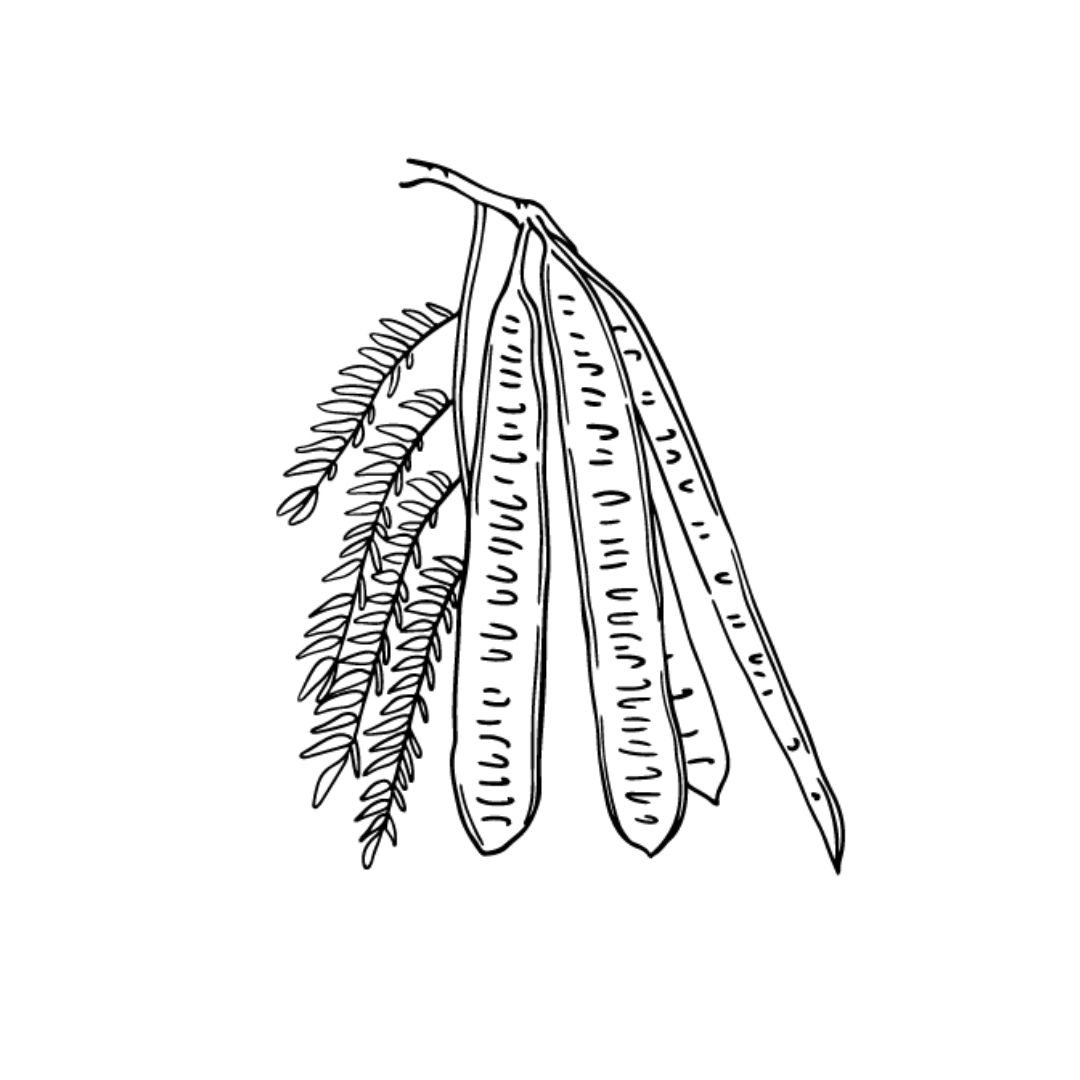
Tempe lamtoro or tempe mlandingan is made using exclusively Haole Koa (Leucaena leucocephala) seeds and is especially popular in poorer rural areas as “lamtoro” (haole koa) is widely available.
Here is an Indonesian TV feature about a Javanese woman by the name of Nurlia from Kabupaten Blitar, eastern Java continues her family’s tradition of producing the non-soy based, tempe lamtoro. Her product is sought after by locals as an affordable tempe and for its “unique and savory taste”. It looks as though she uses a process of grinding down the brown haole koa seeds before fermentation.
In this fun video, follow along as Indonesian children take haole koa seeds from tree to table to make Tempe Mlanding. From harvesting the Leucaena leucocephala tree to processing the seeds, soaking them, adding in the white starter culture, and fermenting it inside a banana!! You’ll notice that they include both brown and green seeds in their tempe.
We got inspired to try their banana stalk method and it proved to be successful! See the step-by-step tutorial below.
Although in Java it is common to utilize 100% haole koa seeds in tempeh, we have not had success with that yet. In our recipe, we use a combination of soybeans and haole koa seeds and there are also some soy-free options that also work well (see variations below).

Learn more about the history of Leucaena leucocephala and Javanese Tempe in the Haole Koa eBook!
Recipe Variations
Remember that making tempeh is a delicate process of growing a live organism. It takes some practice and results will vary depending on your climate. Here are some options for ingredient variations and different fermentation containers. Have more ideas? Up for trying 100% haole koa seed tempeh? We would love to hear about your findings and what you come up with, post in the comments below!!
Brown vs Green Haole Koa Seeds

Although mostly brown haole koa seeds are used in the traditional Indonesian tempe lamtoro, the green seeds can also be used interchangeably or mixed together both green and brown seeds. Make sure to soak and boil your seeds prior to using in tempeh. See “How to Process Brown Haole Koa Seeds”, Free in the Savage Kitchen App under the Recipes tab.
Soy-Free Variations
The Haole Koa Tempeh Recipe in the Savage Kitchen App calls for soybeans, although this ingredient can easily be substituted for an alternative such as Pidgeon Peas, which also grow well in tropical climates for a 100% local tempeh!! You can purchase Pidgeon Peas dry in the grocery store or harvest them fresh. You could also try substituting with any other legume as a soy-free alternative.
To cook Pidgeon Peas, soak them overnight in plenty of water. Drain and boil on medium-low for 1-2 hours. Make sure the peas are fully cooked before using in your tempeh.


Where to Find Tempeh Culture?
The white powder made up of rhizopus oryzae culture needed for making tempeh can be found at health food stores. Or Cultures For Health has a good starter that you can buy online.

Fermatation Container Options

Ziploc baggie
The first and easiest fermentation method is using small ziploc bags. This can be a good place to start to clearly see the fermentation process and growth of the white mycelium. Although this is convenient, unfortunately, the single-use plastic bags need to be perforated with tiny hols and therefore more difficult to reuse. For zero-waste alternatives, we turn to the traditional methods below.
Banana Leaf vs Ti Leaf

Traditionally, tempeh is often wrapped in banana leaf as shown in this photo from a Java marketplace. For this method, gather larger banana leaves, rinse and cut into appropriate size pieces. We have found it difficult to keep the banana leaves together as they tend to rip along its lines. Large Ti leaf is the perfect size for a tempeh block and easy to keep together when folded properly. See Folding Ti Leaf Step-by-step below.
Banana Stalk


Inspired by the Indonesian family in the video above “Tempe Mlanding”, we tried the banana stalk method for fermentation and the results were fabulous! The inner core of the banana stalk proved to be a great vessel for the beans to incubate, you can make a lot at a time in a long cylinder, and the round/oval shape result is easy to slice. If you have any extra banana stumps that need to be cut, we highly recommend trying this method! See Banana Stalk Ferment Step-by-step below.
Folding Ti Leaf Step-by-step
Step 1
Gather large ti leaf for your tempeh. You’ll need about 4-6 leaves for 1 recipe of Haole Koa Tempeh, Free in the Savage Kitchen App. Wipe them down on both sides with a wet rag to remove any dirt. You can make banana string by stipping the fibers of a banana stalk, or use a natural fiber string such as hemp or cotton.

Step 2
Cut of the stems of your ti leaf.

Step 3
Where the spine of the leaf starts to get stiff, cut a small slit in the spine without cutting all the way through.

Step 4
Use the edge of a countertop to debone your ti leaf, pulling away to lift of the spine.

Step 5
Pull along the countertop all the way to remove the spine completely.

Step 6
Place about 1 1/2 cups of the bean mixture in the middle of the ti leaf, shiny side down (Recipe Free in the Savage Kitchen App).

Step 7
Fold the ti leaf lengthwise of the beans.

Step 8
Start by folding the pointy side over, keeping the fold tight.

Step 9
Bring the stem side under and fold over.

Step 10
Keep the package tight as not to loose any beans.

Step 11
Pick up the package from underneath and keep tight while wrapping the string around several times.

Step 12
Your ti leaf package is now ready to ferment. There is no need to perforate holes, there is enough air getting is naturally. Follow the Recipe in the Savage Kitchen App for incubation process.

Banana Stalk Ferment Step-by-step
Step 1
Cut down a banana stalk with a machete. The stalk can be a small or large one.

Step 2
Cut to desired length, about 3-4 feet, and remove leaves and outer layer.

Step 3
Cut the stalk in half lengthwise using a machete.

Step 4
Tear the stalk in half lengthwise.

Step 5
Remove the inner core to find your desired cylinder size, about 2-3 inches.

Step 6
Find your two desired halves that make a 2-3 inch cylinder. You can also set aside a second cylinder of similar size in case your beans don’t all fit inside the first one.

Step 7
Shred some of the leftover banana stalk into long pieces of string. Tie your cylinder using the banana string. Plug one side of the cylinder using additional cut-up pieces of banana stalk. This does not need to be airtight or look pretty, just make it so your beans won’t fall out when the cylinder lays flat.


Step 8
Follow the recipe instructions for Haole Koa Tempeh, free in the Savage Kitchen App!
When your bean mixture is ready, pour into your banana stalk cylinder and cover the top with some more small pieces of banana stalk. You may need to make a second cylinder if all the beans don’t fit into the first one. For incubation, wrap the banana stalk in towels and place in a warm area for fermentation.

We’re excited to hear what kind of results you have making your own Haole Koa Tempeh!! Share with us in the comments below!
Happy Fermenting!








Leave a Reply
Want to join the discussion?Feel free to contribute!