• Shopping Cart Shopping Cart
    0Shopping Cart
Sunny Savage | Wild Food Forager
  • About
  • Blog
  • Store
  • Contact
  • Menu Menu
  • Link to Instagram
  • Link to Facebook
Journal, Recipes

Chinese Violet Chips

One of the most common wild food plants available throughout the Hawaiian Islands is Chinese violet (Asystasia gangetica), a common herb growing mostly in lower elevation windward locations, but who can also be found in shady areas on leeward sides. Depending on how much water the plant gets, the greens are an easily found wild food that are mild in flavor. 

I recently had a new wild food intern arrive at my place and asked her to harvest this plant, as it was smothering my ‘olena starts. This woman (Marla) is rad, an adventurous eater and chef who had whipped up a chimichurri made from the raw greens when I returned – brilliant – except that the greens need to be cooked! She said she had done an internet search and that the greens were ok to eat raw…after some mystery I realized that an internet search of “chinese violet edible” brings you to another plant who is also known by the name Chinese violet (Viola yezoensis). eeeeek, yet another case of common names versus scientific names and the MASSIVE IMPORTANCE of learning those scientific names.

Marla tried again and came up with these delicious, cooked, chips in the recipe below. A learning opportunity for everyone. I’ve been eating Chinese violets (Asystasia gangetica) for the last 7 years, and I’ve never found any information on the flowers’ edibility. The flowers are gorgeous added to dye bundles though, and create a greenish/blue color depending on what kind of natural dyebath you’ve brewed up! There isn’t a lot of research on this plant, mostly we have ethnobotanical information on how people around Africa and Asia eat it, but this paper gives you a glimpse into how science is confirming some of its traditional medicinal uses as an anti-asthmatic and more are emerging.

Chinese violet (Asystasia gangetica) has a stemmy appearance, and although it typically grows near to the ground it can climb on top of, or with, other plants that reach some height. Photo by Sunny Savage
All of these Chinese violet (Asystasia gangetica) leaves are perfect for eating.
Photo by Sunny Savage
A showy display of Chinese violet’s trumpet-shaped flowers, which can be either purple or white. Photo by Forest & Kim Starr

Chinese Violet Leaf Chips

Ingredients:

1 Cup Chinese Violet Leaves (rinse and pat dry)

2 Tablespoons High Heat Cooking Oil (Olive Oil works for this short cooking time)

1/2 Teaspoon Salt

1/2 Teaspoon Black Pepper

Instructions:

1. Preheat oven to 350 degrees F and line a baking sheet with parchment paper or silicone liner sheet.

2. Add leaves and oil to a large bowl and toss with hands until leaves are evenly coated. 

3. Add salt and pepper to bowl and toss with hands until leaves are evenly coated.

4. Place leaves in a single layer on prepared baking sheet. Do not overlap. 

5. Bake for 5 minutes.
6. Best when eaten immediately after baking, but can be stored by putting into an airtight container.

Chinese violet leaves prior to baking in the oven. These have a small amount of nutritional yeast added to them. You could try adding spices or ground nuts as well. 
Photo by Marla Tomorug
FacebookTweetPin
June 27, 2020/0 Comments/by Sunny Savage
Tags: asystasia gangetica, chinese violet, chinese violets, eat the invasives, eat the weeds, invasive species, tropical violet, tropical violets, wild greens
https://sunnysavage.com/wp-content/uploads/2020/06/Untitled-design-7.jpg 1920 1080 Sunny Savage https://sunnysavage.com/wp-content/uploads/2020/01/sunny-savage-logo-white.png Sunny Savage2020-06-27 03:00:472020-07-03 20:25:13Chinese Violet Chips
You might also like
opiuma-pithecellobium dulce-manila tamarind-foraging-hawaii-maui-wild vegetable ʻOpiuma (Pithecellobium dulce)
Spanish Needles Kimchi
Java Plum Starfruit Crisp
Guaje and Rajas con Crema
Protected: Haole Koa Bud Pickles
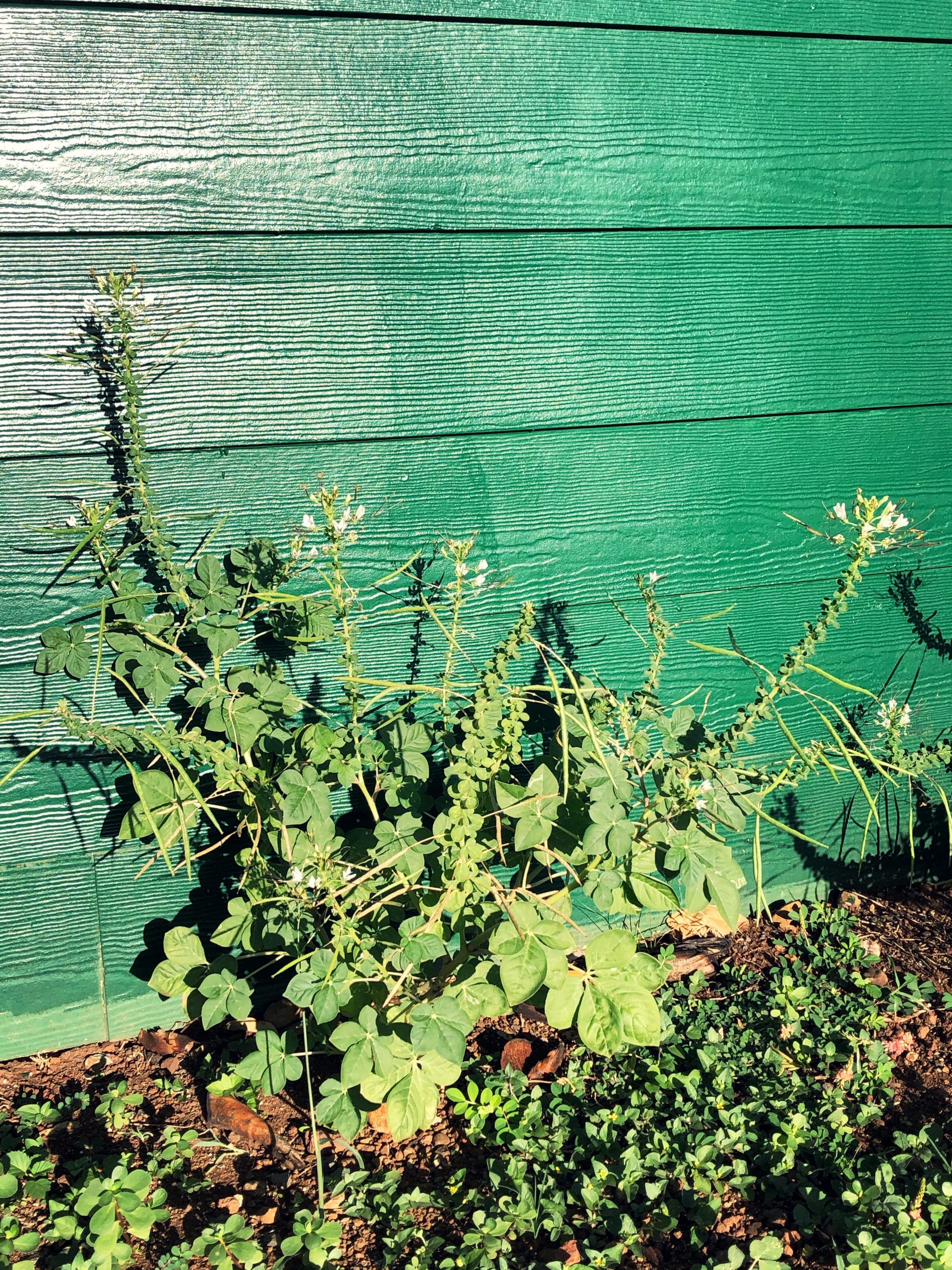
Spider Wisp (Cleome gynandra)
Foraged Wild Greens & Sandalwood Distillation – Eat Local Maui Challenge
Meet a Few Wild Plant Allies
0 replies

Leave a Reply

Want to join the discussion?
Feel free to contribute!

Leave a Reply Cancel reply

Your email address will not be published. Required fields are marked *

Search Search

THE WILD NEWS

Interested in learning more about wild foods? wild medicines? Promise I won’t spam you, and you can unsubscribe at any time.
JOIN THE WILD NEWS

Sunny Savage

Sunny Savage is a respected wild food forager. Her work promoting the use of edible invasive species through the Savage Farms Wellness Center, delicious recipe development, and high quality education is ground-breaking in Hawaii.

Recent Posts

  • Low Cost Recipe Idea
  • DAY 29 WILDBIOME PROJECT HAWAII
  • DAY 28 WILDBIOME PROJECT HAWAII
  • DAY 25 WILDBIOME PROJECT HAWAII
  • DAY 24 WILDBIOME PROJECT HAWAII
  • DAY 20 WILDBIOME PROJECT HAWAII
  • DAY 11 Wildbiome Project Hawaii
  • DAY 10 Wildbiome Project Hawaii
  • DAY 6 Wildbiome Project Hawaii
  • DAY 3 Wildbiome Project Hawaii
  • DAY 1 Wildbiome Project Hawaii
  • ʻOpiuma (Pithecellobium dulce)
  • Maui Massage & Wild Spa Experience
  • Organic Maui Farm to Table Dining
  • Maui Flower Bath

Categories

Archives

The Wild Newsletter

Interested in learning more about wild foods? Promise I won’t spam you, and you can unsubscribe at any time.

JOIN THE WILD NEWS

Sunny Savage Website


Maui, HI 96793
support@sunnysavage.com
Voice Only – 808.206.8882

© 2026 Sunny Savage | Wild Food Forager
  • Link to Instagram
  • Link to Facebook
  • About
  • Blog
  • Store
  • Contact
Link to: Over 30 Countries Using Savage Kitchen app Link to: Over 30 Countries Using Savage Kitchen app Over 30 Countries Using Savage Kitchen app Link to: Yogahealer Podcast Link to: Yogahealer Podcast Yogahealer Podcast
Scroll to top Scroll to top Scroll to top